Ascension Protocol
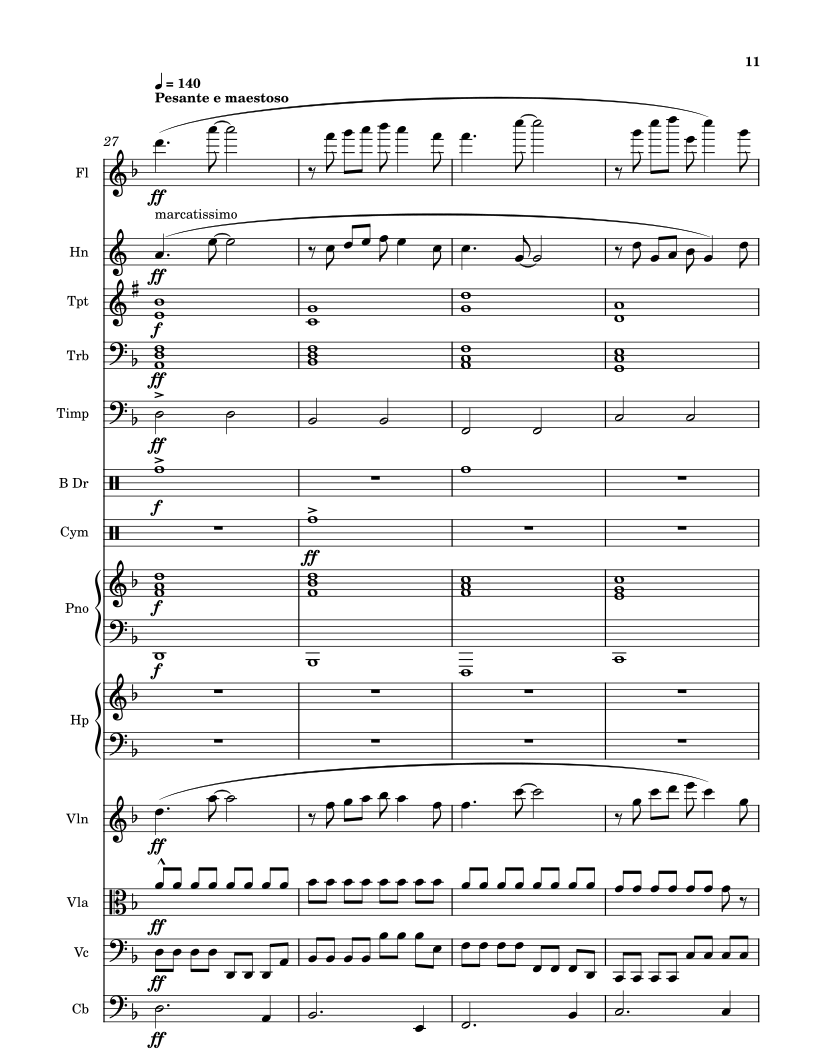
Full orchestra. Flute, horn, trumpet, trombone, timpani, bass drum, cymbals, piano, harp and strings — each on its own staff, each correctly transposed.
For composers and arrangers · Notation, not audio
Generating audio is free now. Getting a score is not — every part separately notated, correctly transposed, as MusicXML that opens in MuseScore, Dorico or Sibelius and carries on being your file.
Written by Larkato
Larkato wrote the notation. The audio is MuseScore playing that file back — no audio model touched it, which is the whole point. Take the score and keep working on it.
Full orchestra. Flute, horn, trumpet, trombone, timpani, bass drum, cymbals, piano, harp and strings — each on its own staff, each correctly transposed.
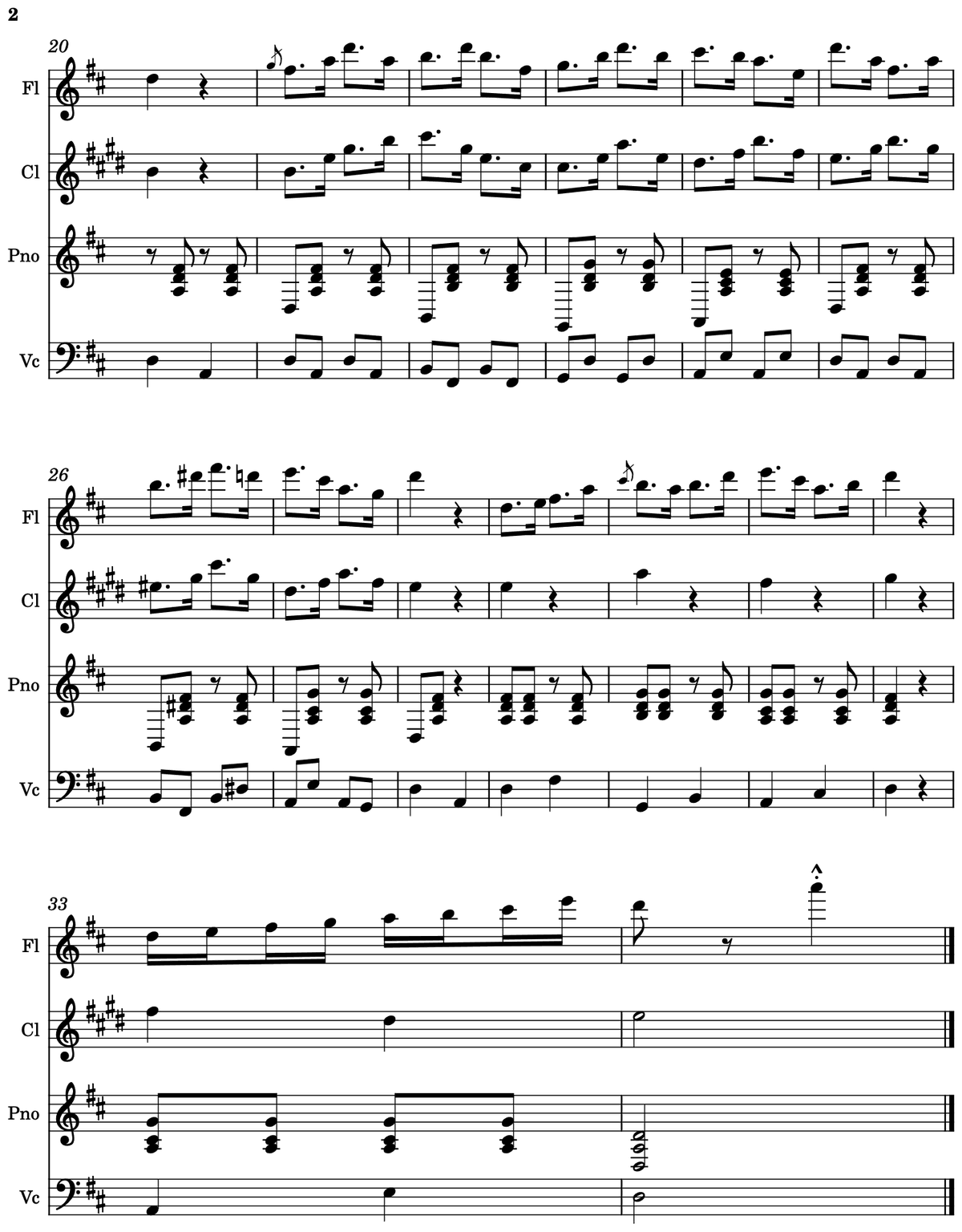
A chamber quartet, because not everything is a trailer cue. Flute, clarinet, piano and cello — small enough to put in front of four players on Thursday.
Both open in MuseScore, Dorico, Sibelius or Finale. MIDI and ABC come out too.
Why notation
Half a dozen models will generate a convincing track for nothing. None of them can hand you the second oboe part.
Want something to listen to? Use one of those. This is for when people have to play it.
A cue's skeleton in minutes. Open the MusicXML in Dorico and make it yours.
Arrange for the ensemble actually in the room. Ranges are respected by construction, so the parts are playable.
Upload a tune, get an arrangement around it. The melody stays locked; everything else is written to fit.